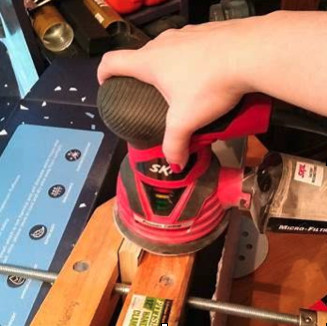
What is Edge Sanding
Edge sanding is a finishing step that lightly sands the trimmed page edges to smooth the surface and reduce fibers and fuzz. It is most commonly used as preparation before metallic gilding or sprayed edge, so the film bonds cleanly and looks more uniform.
Why It Matters
Paper edges are naturally porous and can be slightly rough after trimming. Smoothing the edge helps improve adhesion and makes the final metallic surface look cleaner.
Recommended Grit (Fineness)
The appropriate sanding grit depends on the type of edge finish being applied. For metallic gilding, fine grit sanding in the 320–400 range is commonly used. This level of fineness smooths the surface while leaving a slight micro-tooth that helps the metallic film bond properly and reflect cleanly. If sanding is too fine, such as 600 grit or higher, adhesion can be reduced because the surface becomes overly polished.
For sprayed or printed edges, sanding is typically lighter and often falls in the 220–320 grit range. In these cases, the primary goal is to remove loose fibers and surface fuzz rather than create a bonding surface for metallic film. Paint and ink do not require the same level of surface refinement, so excessively fine sanding is usually unnecessary.
Edge Sanding FAQ
Does edge sanding make the book smaller?
Just a tiny bit. It is a light surface preparation step. It is not intended to change trim size.
Is edge sanding required for all edge finishes?
Edge sanding is most commonly associated with metallic film gilding, where a smoother surface helps improve adhesion and overall appearance. Other edge finishes may not require the same level of refinement. However, depending on how cleanly the book block is trimmed, some surface preparation may still be necessary to ensure even results for inkjet or spray-applied edge printing.