
Smyth Sewing Bookbinding Process
This video shows how printed signatures are gathered and sewn with thread before the book block moves into the next binding steps.
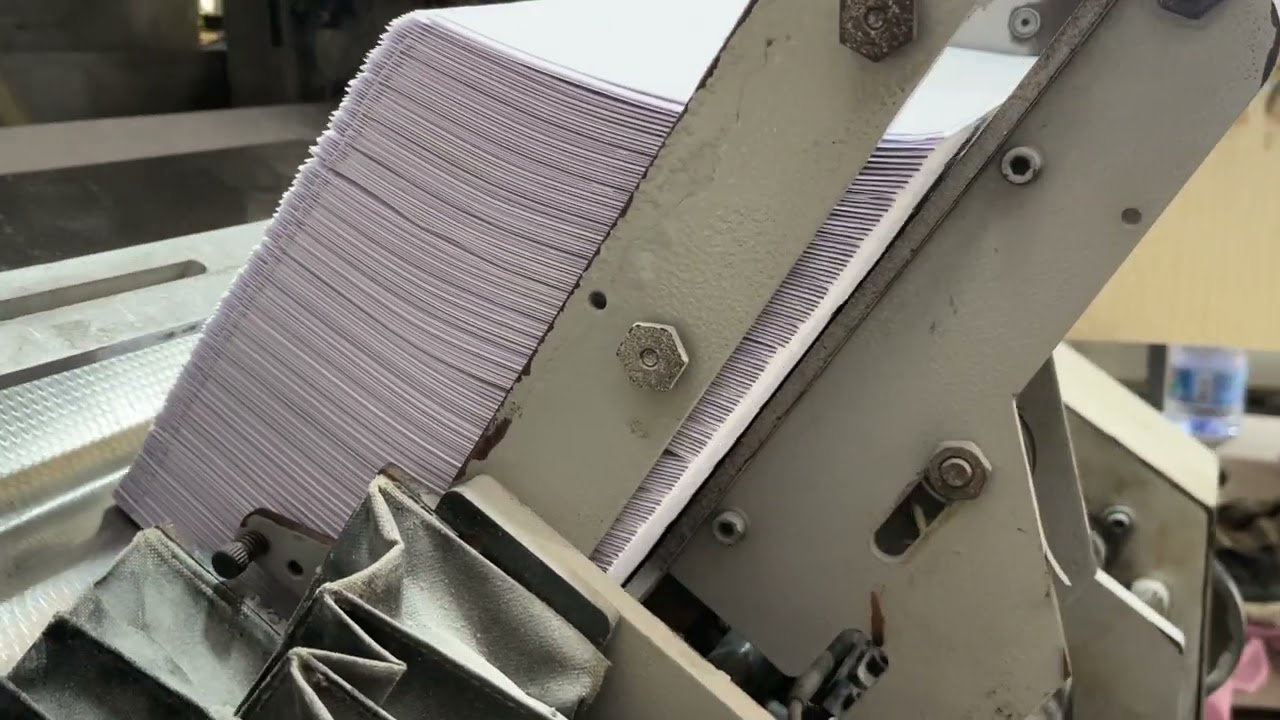
Key moments
| 00:00 | Finished sewn stack coming out of the exit port |
| 00:12 | Top view of the needle and thread |
| 00:18 | Folded signatures loaded in the feeding slot |
| 00:31 | Finished sewn stack on the table, ready to be cut into individual book blocks |
What is Smyth sewing?
Smyth sewing is the step where the folded pages are sewn together with thread.
For most offset printed books, the pages are not printed one by one. They are printed on large sheets first. Then the large sheets are folded into groups of pages. These folded groups are called signatures.
The Smyth sewing machine sews through the middle fold of each signature. It is not sewing loose single pages one by one. It is sewing the folded page groups together and connecting them into one book block.
What part of the book is being sewn?
The part being sewn is the inside pages, before the cover is attached.
More specifically, the thread goes through the fold of each signature. After all the signatures are sewn together, they become one strong book block.
So at this stage, the cover is not being sewn. The machine is sewing the folded interior page sections.
Why does thread sewing make the book stronger than glue-only binding?
Glue-only binding mainly depends on glue holding the page edges together.
Smyth sewing adds thread through the folded signatures. This gives the book a physical structure before glue, spine lining, or the cover is added.
That is why sewn binding is often used for hardcover books, art books, photography books, textbooks, and books that will be opened many times.
The thread helps keep the pages together even after the book is opened, handled, shipped, and read many times.
Why does Smyth sewing help a book open better?
Because the pages are sewn through the fold, the book can open from the natural folded sections.
With glue-only binding, the pages depend more on the glued spine, so the book may feel stiffer when opened.
For art books, photography books, and coffee table books, this can be important because images often go across a full spread. A sewn book block usually opens more naturally and makes the gutter feel less tight.
What happens after Smyth sewing is finished?
After Smyth sewing, the book block is still not finished.
The sewn book block usually goes through spine gluing, trimming, spine reinforcement, and lining.
For a hardcover book, the book block is later attached to the hardcover case. That step is called casing-in.
So Smyth sewing is not the final step. It is the important middle step that turns folded page sections into a strong book block.