
Book Slipcase Showing Video
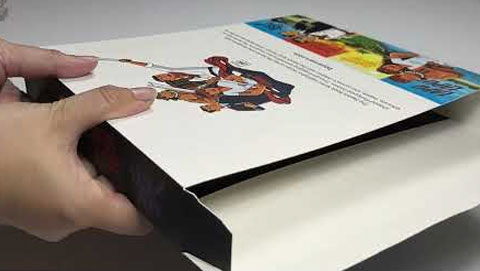
This video shows a completed cardstock book slipcase. You can see the finished case, the flat shipping form, the folding flaps, and how the case folds into shape.
Key moments
| 00:00 | Finished cardstock slipcase is shown |
| 00:05 | Slipcase is shown in its flat shipping form |
| 00:11 | Folding flaps and panels are shown before assembly |
| 00:18 | Flat slipcase is folded into the finished case shape |
What this video shows
This video is a closer look at a finished cardstock slipcase for books. It shows the case standing as a completed piece, then shows the same slipcase flat before it is folded.
The flat piece has scored fold lines and flaps that form the finished case shape. This is the cost-effective slipcase style that can ship flat and take up less space than a rigid board slipcase.
Why are the fold lines and flaps important?
The fold lines control how the flat slipcase turns into a clean case shape. If the scores are weak, uneven, or in the wrong position, the panels can bow, the corners can look rough, or the finished case may not sit square.
The flaps also matter because they help lock the structure together. On a cardstock slipcase, the strength comes from the folded panels working together, not just from the paper thickness. A clean slipcase template helps place those folds and flaps in the right position for the finished book size.
Why does the slipcase ship flat?
This type of cardstock slipcase can be shipped flat before final folding. That saves space, reduces shipping volume, and makes it more practical for larger quantities.
This is different from a rigid hardcover slipcase. A hardcover slipcase is built from board and does not fold flat, so it takes more room to ship. For many book series, a folded cardstock slipcase is the more economical choice.
Why does slipcase fit matter?
A slipcase should hold the book securely without making it hard to slide the book in and out. If it is too tight, the book corners can rub or the case can bow. If it is too loose, the book can shift around and feel unfinished.
For best results, the slipcase should be designed after the final book specs are known. The printer needs the finished book size, spine width, cover type, and the number of books going into the case.