
Book Signature Folding for Smyth Sewing
This video shows printed press sheets being folded into signatures before Smyth sewing. These folded sections are used in both hardcover books and Smyth sewn softcover books.
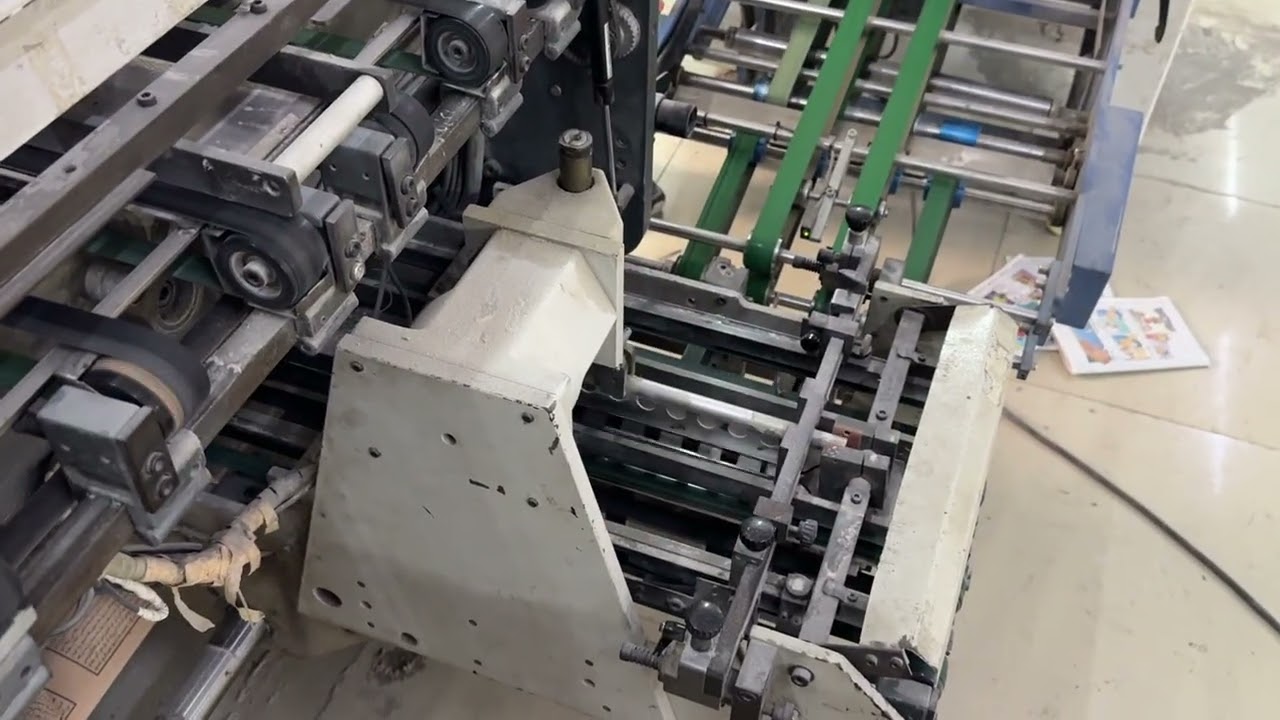
Key moments
| 00:00 | Printed press sheets are stacked at the feeder |
| 00:05 | Sheets feed into the folding machine one at a time |
| 00:12 | The sheet passes through the folding section and starts forming a signature |
| 00:20 | Folded signatures move out of the machine for stacking |
| 00:28 | Finished signatures are ready for gathering and Smyth sewing |
What is a book signature?
A signature is a folded group of pages. In offset book printing, pages are usually printed together on large press sheets, then folded down into sections in the correct page order.
Those folded sections are later gathered together to make the inside of the book. For sewn binding, the thread goes through the fold of each signature instead of through loose single sheets.
Why does folding matter before Smyth sewing?
Good folding keeps the page order, head and tail alignment, and spine fold consistent before the book reaches the sewing machine. If the fold is off, the finished book block can show uneven pages, a tight gutter, or poor alignment after trimming.
After folding, the signatures are gathered in sequence and move to Smyth sewing, where thread connects the folded sections into a strong book block.
Why is this step used for hardcover and sewn softcover books?
Both sewn hardcover and sewn softcover books start with the same basic inside structure: printed sheets folded into signatures, then sewn into a book block.
The difference comes later. A hardcover book is attached to a rigid case during casing-in, while a sewn softcover book is attached to a flexible printed cover and trimmed into a paperback shape.